

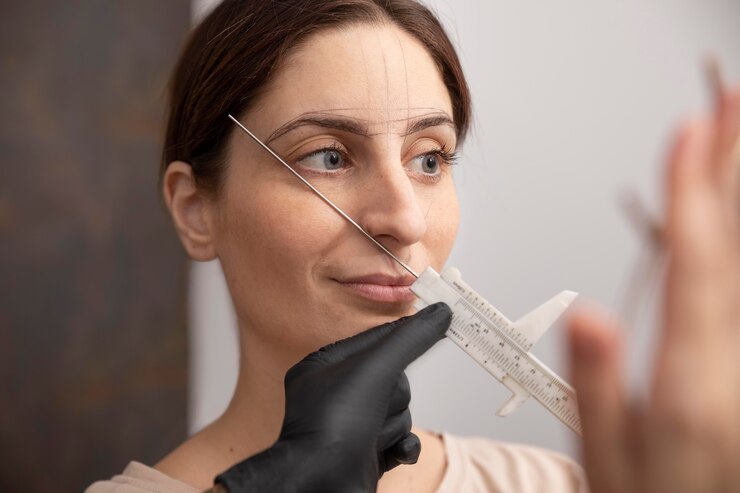
Facial contouring is one of the most popular aesthetic procedures in recent years, aimed at improving facial harmony, adding volume to specific areas, and correcting certain asymmetries. Despite its high popularity, not everyone necessarily needs facial contouring. Being aware of the appropriate conditions for undergoing this aesthetic procedure can help in making a more informed decision and achieving more satisfying results.
What is facial contouring?
Facial contouring is a set of aesthetic procedures designed to improve facial shape and enhance areas such as the cheeks, jawline, and chin. This is typically performed using dermal fillers, fat injections, or other non-surgical techniques.
The main goal of facial contouring is to create greater facial balance and enhance appearance without altering the individual’s natural identity. In many cases, the results of facial contouring can make the face appear younger and more refreshed.
People with facial volume loss
With aging, the levels of collagen and subcutaneous fat decrease, which can lead to sunken cheeks, loss of facial volume, and mild skin sagging. Individuals who have experienced facial thinning due to aging or significant weight loss are generally considered among the best candidates for facial contouring.
Restoring volume in the affected areas can help bring back facial freshness and youthfulness, creating a more balanced appearance.
People with an undefined jawline
Some individuals are genetically predisposed to having a weak or undefined jawline. In such cases, facial contouring can enhance definition in the jawline area, making the face appear more balanced and proportionate.
Additionally, individuals who desire a more defined and sculpted facial appearance may be suitable candidates for this procedure. However, the degree of enhancement should always be tailored to the natural facial structure to ensure the final result does not appear artificial.
People with facial asymmetry
Mild facial asymmetry is natural, but in some individuals these differences are more noticeable and may reduce self-confidence. Facial contouring can be used to correct asymmetry in the cheeks, chin, or jawline.
A specialist carefully evaluates the facial structure and injects the required volume into different areas to create better symmetry between both sides of the face.
Who should avoid facial contouring?
Individuals who are satisfied with their natural facial features and are considering facial contouring only due to beauty trends should consult a physician before making any decision. Additionally, individuals who have unrealistic expectations about the results of this procedure may not feel fully satisfied after treatment.
The presence of certain underlying medical conditions, active skin infections, or allergies to injectable materials may also be a contraindication for facial contouring.
Is facial contouring necessary for everyone?
The answer to this question is no. Facial contouring is considered an elective procedure for improving facial harmony and does not have a medical necessity. The best candidates are individuals who experience facial volume loss, asymmetry, or a weak jawline and chin structure, and who are seeking subtle and natural-looking improvements.
Ultimately, the decision to undergo facial contouring should be made after a thorough evaluation by a specialist, based on each individual’s unique characteristics. Choosing correctly and maintaining moderation in aesthetic enhancements are the most important factors in achieving a face that is both attractive and natural.